
Comptia Network+ N10-008 Exam Questions and Answers PDF: A Comprehensive Study Plan
Preparing for the N10-008 exam? Focus on privacy alongside materials; Prepdayexams offers resources for successful completion, aiding your CompTIA Network certification journey.
Embarking on your CompTIA Network+ N10-008 certification journey? This exam validates essential skills for network professionals. It assesses your understanding of networking concepts, infrastructure, security, and troubleshooting. Passing demonstrates competence in configuring, managing, and securing networks.
Candidates should prioritize understanding core networking principles. Resources like Prepdayexams provide valuable preparation materials, including practice questions and exams. A key concern for aspirants is often data privacy when selecting study resources. The N10-008 exam is a crucial step towards a successful IT career, opening doors to roles like Network Administrator, Network Engineer, and IT Support Specialist. Thorough preparation is paramount for success.
II. Understanding the Exam Objectives
The CompTIA Network+ N10-008 exam objectives are your roadmap to success. They cover network fundamentals, infrastructure, security, and troubleshooting. Mastery of these areas is crucial for passing. Key domains include network topologies, OSI/TCP-IP models, cabling, wireless standards, and network devices.
Preparation should focus on practical application alongside theoretical knowledge. Resources like practice exams (Prepdayexams) help identify knowledge gaps. Remember to consider privacy when choosing study materials. Understanding objectives ensures focused study, maximizing your chances of achieving certification. Prioritize areas where you feel less confident, and consistently review core concepts to build a strong foundation.
III. Network Fundamentals
A solid grasp of network fundamentals is essential for the N10-008 exam. This includes understanding network topologies – bus, star, ring, and mesh – and their respective advantages and disadvantages. Equally important is the OSI model, knowing each layer’s function and how data travels through it.
The TCP/IP model and its protocol suite are also critical. Familiarize yourself with protocols like TCP, UDP, IP, and their roles in communication. Resources like CompTIA study guides and practice questions (consider Prepdayexams) can reinforce these concepts. Remember to prioritize understanding how networks function, not just memorizing definitions, for effective exam preparation.
A. Network Topologies (Bus, Star, Ring, Mesh)
Mastering network topologies is crucial for the N10-008. Understand the Bus topology’s simplicity and single point of failure. The Star topology, with its central hub, offers easy management but relies on that hub’s functionality. Ring topologies utilize token passing, while Mesh provides redundancy through multiple connections.
Know the pros and cons of each – scalability, cost, fault tolerance, and ease of troubleshooting. Practice questions, like those found in CompTIA resources and Prepdayexams materials, will test your ability to identify topologies and their appropriate use cases. Visualizing these structures will significantly aid comprehension and exam success.
B. OSI Model Layers and Functions
The OSI model is foundational to networking. Thoroughly understand its seven layers: Physical, Data Link, Network, Transport, Session, Presentation, and Application. Each layer has specific functions – encapsulation, addressing, routing, and application interaction.
For the N10-008, focus on how data travels through these layers. Know the protocols associated with each (e.g., Ethernet at Data Link, IP at Network, TCP/UDP at Transport). Practice identifying layer-specific issues and troubleshooting scenarios. Resources like CompTIA study guides and Prepdayexams’ practice questions will reinforce your understanding and prepare you for exam questions regarding data flow and layer interactions.
C. TCP/IP Model and Protocol Suite
The TCP/IP model is the practical implementation of network communication. It comprises four layers: Application, Transport, Internet, and Network Access. Master the protocols within each layer – HTTP, FTP, SMTP (Application); TCP, UDP (Transport); IP, ICMP (Internet); and Ethernet, Wi-Fi (Network Access).
For the N10-008 exam, differentiate between TCP (connection-oriented, reliable) and UDP (connectionless, faster). Understand port numbers and their associated services. Utilize resources like CompTIA study materials and Prepdayexams’ practice tests to solidify your knowledge of protocol functions and troubleshooting. Knowing how these protocols interact is crucial for success.
IV. Network Infrastructure
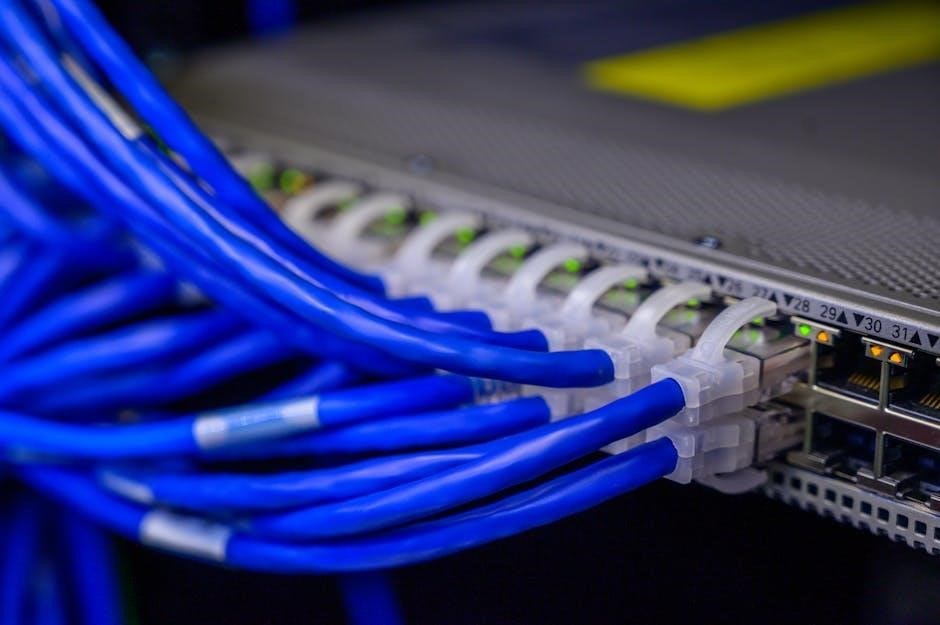
A robust network relies on understanding its core components. This includes cabling – copper (Cat5e, Cat6) for Ethernet, and fiber optic for high-speed, long-distance connections. Wireless standards are also key; familiarize yourself with 802.11 a/b/g/n/ac/ax, noting their frequencies and speeds.
Network devices like routers manage traffic between networks, switches connect devices within a network, and firewalls provide security. The N10-008 exam expects you to know their functions and configurations. Prepdayexams and CompTIA resources offer focused study materials. Mastering these infrastructure elements is vital for effective network management and troubleshooting.

A. Cabling Types (Copper, Fiber Optic)
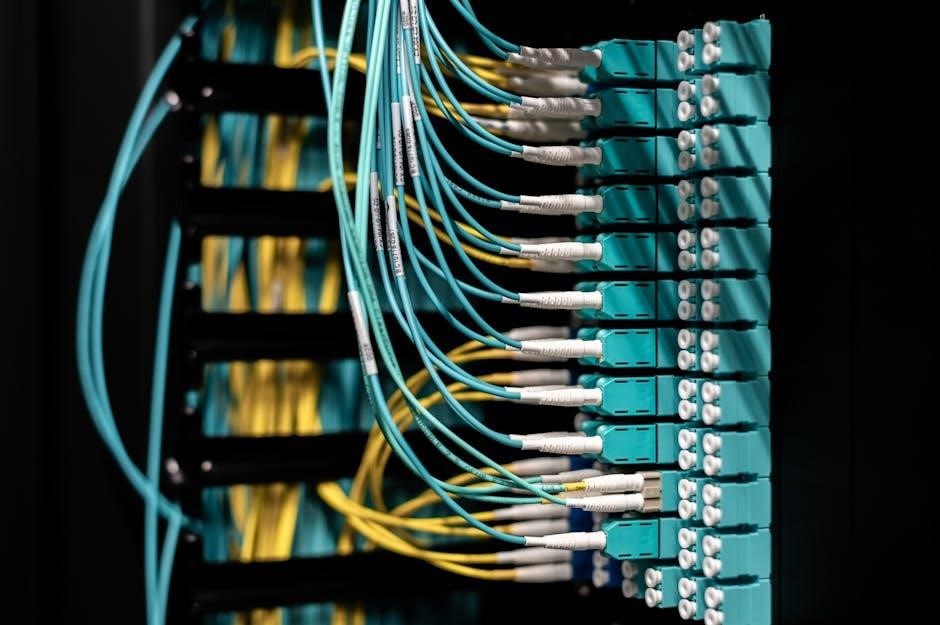
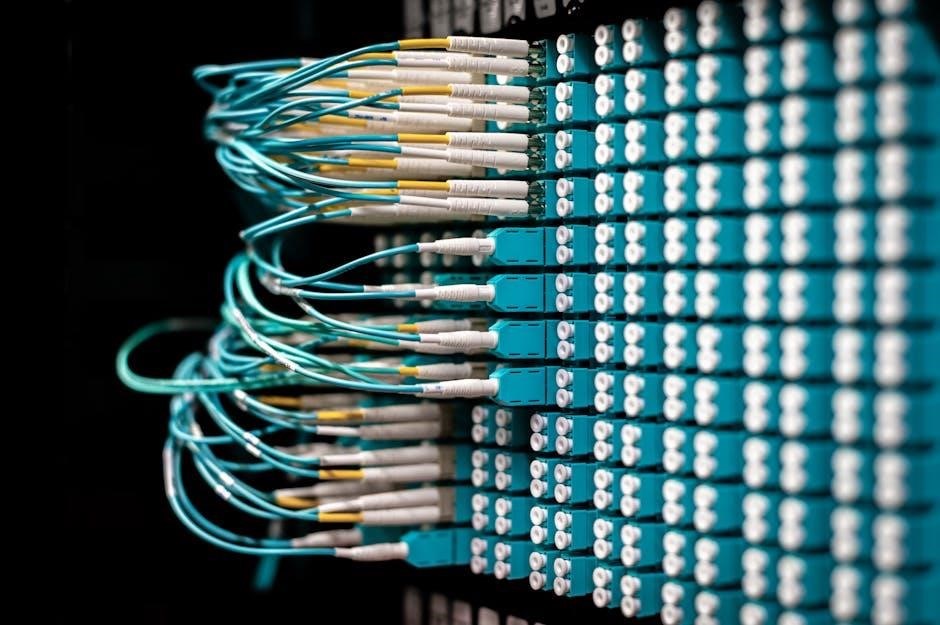
Understanding cabling is fundamental to networking. Copper cabling, like Cat5e, Cat6, and Cat6a, utilizes electrical signals for data transmission, commonly used for Ethernet. Fiber optic cabling employs light signals, offering higher bandwidth and longer distances with less signal degradation.
The N10-008 exam will test your knowledge of connector types (RJ45, LC, SC), cable limitations, and appropriate use cases. Consider factors like cost, distance, and bandwidth requirements when choosing a cabling solution. Resources like CompTIA study guides and Prepdayexams practice questions will solidify your understanding of these crucial network building blocks.
B. Wireless Networking Standards (802.11 a/b/g/n/ac/ax)
Wireless standards define how devices communicate wirelessly. 802.11b/g/n are older standards, with ‘n’ offering improved speed. 802.11ac provides significantly faster speeds and wider channels, while 802.11ax (Wi-Fi 6) focuses on efficiency in dense environments.
The N10-008 exam expects you to differentiate these standards based on frequency, bandwidth, and range. Understand concepts like MIMO and channel bonding. Prepdayexams and CompTIA resources will help you grasp the nuances of each standard, enabling you to select the optimal wireless solution for various network scenarios. Knowing these standards is vital for network design and troubleshooting.
C. Network Devices (Routers, Switches, Firewalls)
Core network devices each have distinct roles. Routers forward data between networks, utilizing IP addresses. Switches connect devices within a network, using MAC addresses for efficient communication. Firewalls protect networks by controlling incoming and outgoing traffic based on security rules.
The N10-008 exam requires understanding how these devices function individually and interact. Prepdayexams’ materials and CompTIA study guides emphasize their configurations and troubleshooting. Expect questions on NAT, port forwarding, and firewall rule creation. Mastery of these devices is crucial for building and securing a robust network infrastructure, a key component of the certification.
V. Network Configuration & Management
Effective network management hinges on proper configuration. IP addressing and subnetting are foundational, requiring a firm grasp of IPv4 and IPv6. DHCP automates IP assignment, while DNS translates domain names to IP addresses – both vital for seamless network operation.
The N10-008 exam tests your ability to configure these services and utilize network monitoring tools. Prepdayexams resources and CompTIA’s official documentation will prepare you for questions on troubleshooting connectivity issues and analyzing network performance. Expect scenarios involving command-line configuration and interpreting monitoring data for optimal network health.
A. IP Addressing and Subnetting
Mastering IP addressing and subnetting is crucial for the N10-008 exam. Understand IPv4 and IPv6 address structures, including public and private addresses. Subnetting allows efficient network segmentation, optimizing bandwidth and security.
Expect questions on calculating subnet masks, determining usable host ranges, and applying CIDR notation. Resources like Prepdayexams and CompTIA study guides provide practice questions and explanations. Proficiency in these concepts is essential for configuring network devices and troubleshooting connectivity issues. A solid foundation will significantly boost your exam confidence.
B. DHCP and DNS Configuration
Dynamic Host Configuration Protocol (DHCP) and Domain Name System (DNS) are fundamental networking services. The N10-008 exam tests your ability to configure and troubleshoot both. DHCP automatically assigns IP addresses, simplifying network administration, while DNS translates domain names into IP addresses, enabling user-friendly access to resources.
Expect questions on DHCP scope configuration, DNS record types (A, CNAME, MX), and troubleshooting resolution failures. Prepdayexams and official CompTIA materials offer valuable practice. Understanding how these services interact is vital for network functionality. Proper configuration ensures seamless connectivity and efficient resource allocation within a network environment.
C. Network Monitoring Tools
Effective network monitoring is crucial for maintaining optimal performance and identifying potential issues. The CompTIA N10-008 exam assesses your knowledge of various monitoring tools and techniques. Expect questions regarding tools like ping, traceroute (tracert), and network analyzers.
Understanding how to interpret the output from these tools is key. You should be familiar with concepts like baseline performance, threshold alerts, and log analysis. Resources from Prepdayexams and official CompTIA study guides will help you master these skills. Proactive monitoring allows for swift problem resolution, minimizing downtime and ensuring network stability.
VI. Network Security
Network security is a paramount concern in today’s interconnected world, and a significant portion of the N10-008 exam focuses on this area. You’ll need to demonstrate understanding of common threats like malware, phishing attacks, and Distributed Denial of Service (DDoS) attacks.
The exam will also cover essential security protocols such as TLS/SSL and VPNs, and their roles in data encryption and secure remote access. Familiarize yourself with firewall configuration and management best practices. Prepdayexams and CompTIA resources will aid in mastering these concepts. A strong grasp of security principles is vital for protecting network assets and maintaining data integrity.
A. Common Network Threats (Malware, Phishing, DDoS)
Understanding prevalent network threats is crucial for N10-008 exam success. Malware encompasses viruses, worms, and Trojans, each designed to compromise systems. Phishing attacks rely on social engineering to steal credentials, often through deceptive emails. Distributed Denial of Service (DDoS) attacks overwhelm networks with traffic, causing service disruptions.
Recognize the characteristics of each threat and the mitigation techniques. Knowing how these attacks function – from infection vectors to impact – is key. Resources like Prepdayexams and official CompTIA materials will provide detailed insights. Protecting networks requires proactive threat identification and robust security measures.
B. Security Protocols (TLS/SSL, VPN)
Securing network communications relies heavily on protocols like TLS/SSL and VPNs. Transport Layer Security (TLS) and its predecessor, Secure Sockets Layer (SSL), encrypt data in transit, protecting sensitive information during web browsing and other online activities. Virtual Private Networks (VPNs) create secure tunnels for remote access, encrypting all traffic between a device and the network.
The N10-008 exam will assess your understanding of how these protocols function and their respective strengths. Prepdayexams and CompTIA resources detail the differences and appropriate use cases. Knowing port numbers and encryption methods is vital for effective network security implementation.
C. Firewall Configuration and Management
Firewalls are essential for network security, acting as the first line of defense against unauthorized access. The N10-008 exam expects you to understand firewall concepts, including stateful inspection, network address translation (NAT), and access control lists (ACLs). Configuration involves defining rules to permit or deny traffic based on source/destination IP addresses, ports, and protocols.
Effective firewall management includes regular rule reviews, log analysis, and updates to protect against emerging threats. Resources like Prepdayexams and official CompTIA materials provide practical guidance. Understanding different firewall types – hardware, software, and cloud-based – is also crucial for exam success.
VII. Troubleshooting Network Issues
Effective network troubleshooting is a core skill validated by the N10-008 exam. Expect questions on identifying and resolving common problems like connectivity issues, slow performance, and security breaches. Mastering command-line tools – ping, tracert, ipconfig/ifconfig – is vital for diagnosing network faults.
A systematic approach is key: define the problem, gather information, identify potential causes, implement a solution, verify functionality, and document the process. Resources like Prepdayexams offer practice scenarios. Network performance analysis, utilizing tools to monitor bandwidth and latency, will also be assessed.
A. Common Network Problems and Solutions
The N10-008 exam heavily emphasizes practical problem-solving. Expect scenarios involving intermittent connectivity, slow network speeds, DNS resolution failures, and DHCP issues. Solutions range from checking physical connections and cable integrity to verifying IP configurations and firewall rules.
Common culprits include misconfigured settings, outdated drivers, hardware failures, and network congestion. Understanding how to isolate problems – is it a local issue or widespread? – is crucial. Prepdayexams provides practice questions mirroring these real-world challenges. Remember to document troubleshooting steps and solutions for future reference.
B. Using Command-Line Tools for Troubleshooting (ping, tracert, ipconfig)
Mastering command-line tools is essential for the N10-008 exam. ipconfig (or ifconfig) displays network configuration details, vital for verifying IP addresses and subnet masks. ping tests connectivity to a destination, revealing packet loss and latency. tracert (or traceroute) maps the path packets take, identifying bottlenecks or failing hops.
Practice interpreting the output of these commands. Understand how to use them to diagnose common issues like unreachable hosts or slow network performance. Prepdayexams’ practice questions frequently require applying these tools to solve simulated network problems. Proficiency with these commands demonstrates a strong foundational understanding of network troubleshooting.
C. Network Performance Analysis
Analyzing network performance is crucial for maintaining optimal functionality. Key metrics include bandwidth utilization, latency, packet loss, and throughput. Tools like packet sniffers (Wireshark) and network monitoring software help capture and analyze network traffic, identifying performance bottlenecks.
The N10-008 exam expects you to understand how these metrics impact user experience and application performance. Prepdayexams’ resources emphasize interpreting performance data to diagnose issues. Learn to differentiate between normal and abnormal behavior, and to recommend solutions for improving network efficiency. Understanding Quality of Service (QoS) and its role in prioritizing traffic is also vital for exam success.
VIII. Cloud Computing Concepts
Cloud computing is increasingly integral to modern networking. The N10-008 exam focuses on understanding the core service models: IaaS (Infrastructure as a Service), PaaS (Platform as a Service), and SaaS (Software as a Service). You’ll need to differentiate between them and recognize real-world examples.

Virtualization technologies, like hypervisors, are fundamental to cloud infrastructure. Prepdayexams’ study materials cover cloud networking considerations, including security, connectivity, and management. Expect questions on hybrid cloud environments and the benefits of cloud adoption. Familiarize yourself with concepts like scalability, elasticity, and the shared responsibility model for cloud security.

A. Cloud Service Models (IaaS, PaaS, SaaS)
Understanding cloud service models is crucial for the N10-008 exam. IaaS provides fundamental computing infrastructure – servers, storage, and networking – offering maximum flexibility. PaaS delivers a platform for developing, running, and managing applications, abstracting away infrastructure concerns. SaaS offers ready-to-use software applications over the internet, like email or CRM.
Prepdayexams’ resources emphasize differentiating these models based on control, responsibility, and cost. Expect questions requiring you to identify which model best suits specific business needs. Knowing examples of each – AWS EC2 (IaaS), Google App Engine (PaaS), Salesforce (SaaS) – is vital for exam success.
B. Virtualization Technologies
Virtualization is a cornerstone of modern networking, heavily tested on the N10-008. It allows running multiple operating systems on a single physical machine, maximizing resource utilization and reducing costs. Key technologies include hypervisors – Type 1 (bare-metal like VMware ESXi) and Type 2 (hosted like VirtualBox).
Prepdayexams’ study materials cover concepts like virtual machines (VMs), containers (Docker), and the benefits of each. Understand the differences between full virtualization, paravirtualization, and hardware-assisted virtualization. Expect questions on VM sprawl, resource allocation, and the impact of virtualization on network performance and security.
C. Cloud Networking Considerations
The N10-008 exam increasingly focuses on cloud networking. Understand how traditional networking principles adapt to cloud environments like AWS, Azure, and Google Cloud. Key concepts include Virtual Private Clouds (VPCs), cloud-based firewalls, and network segmentation within the cloud.
Prepdayexams’ resources will help you grasp cloud connectivity options – VPNs, Direct Connect/ExpressRoute – and their security implications. Expect questions on cloud load balancing, DNS in the cloud, and the shared responsibility model for security. Familiarize yourself with cloud networking topologies and how they differ from on-premises networks.
IX. Automation and Scripting
The N10-008 exam now includes a focus on network automation and scripting. While deep coding isn’t required, understanding the concepts is crucial. Expect questions about the benefits of automation – increased efficiency, reduced errors – and common automation tools.
Prepdayexams’ materials will introduce you to basic scripting with PowerShell and Python, focusing on network configuration tasks. Configuration management tools like Ansible are also relevant. Understand how automation can streamline repetitive tasks like network device configuration and monitoring. Be prepared to identify scenarios where automation would be beneficial and the potential risks involved.
Network automation is rapidly changing IT, and the N10-008 reflects this shift. It’s about using software to automate repetitive network tasks, moving beyond manual configuration. This boosts efficiency, reduces human error, and allows network professionals to focus on more strategic initiatives.
Key concepts include Infrastructure as Code (IaC), where network configurations are managed as code, and the use of APIs to interact with network devices. Prepdayexams’ resources will cover the core principles, explaining how automation frameworks can simplify complex network operations. Understanding the benefits and limitations of automation is vital for exam success.
B. Basic Scripting Concepts (PowerShell, Python)
Scripting is fundamental to network automation, and the N10-008 exam expects a foundational understanding. PowerShell is dominant in Windows environments, while Python’s versatility makes it ideal for cross-platform automation. You’ll need to grasp core concepts like variables, loops, conditional statements, and functions.
Focus on how these languages can be used to interact with network devices via APIs or command-line interfaces. Prepdayexams’ materials will provide practical examples of scripting tasks relevant to network configuration and management. Familiarity with basic syntax and the ability to read and understand scripts are crucial for passing the exam.
C. Configuration Management Tools
Configuration management tools streamline network administration by automating device configurations and ensuring consistency. Understanding tools like Ansible, Puppet, and Chef is increasingly important for network professionals, and the N10-008 exam reflects this shift.
These tools utilize infrastructure-as-code principles, allowing you to define network configurations in a declarative manner. Prepdayexams’ resources will cover the benefits of using these tools, including reduced errors, improved scalability, and faster deployment times. While deep expertise isn’t required, knowing the core concepts and how they relate to network automation is vital for exam success.
X. Exam Preparation Resources
Success on the N10-008 exam hinges on utilizing the right preparation resources. Official CompTIA study guides provide a foundational understanding of the exam objectives, while practice exams – like those offered by Prepdayexams – are crucial for assessing your readiness.
Supplement these with participation in online forums and communities. These platforms offer valuable insights, shared experiences, and opportunities to clarify doubts. Remember to prioritize resources that align with the current exam blueprint. A well-rounded approach, combining official materials, practice questions, and community engagement, significantly increases your chances of achieving certification.

A. Official CompTIA Study Guides
CompTIA’s official study guides are the cornerstone of N10-008 preparation. These resources are meticulously crafted to align directly with the exam objectives, ensuring comprehensive coverage of all tested areas. They provide in-depth explanations of networking concepts, practical examples, and review questions to reinforce learning.
While other materials can supplement your studies, the official guides offer the most accurate and up-to-date information. Consider utilizing both the core study guide and any accompanying practice tests or labs offered by CompTIA. A solid foundation built on official resources is essential for success on the challenging N10-008 exam.
B. Practice Exams and Question Banks
Supplementing study guides with practice exams is crucial for N10-008 success. Question banks, like those offered by Prepdayexams and others, simulate the exam environment, building familiarity and reducing test-day anxiety. They pinpoint knowledge gaps, allowing focused review of weaker areas.
Prioritize exams that closely mirror the N10-008’s format and difficulty. Analyze incorrect answers to understand why you missed them, not just what the correct answer is. Regularly taking practice tests helps refine your timing and test-taking strategy, maximizing your potential score. Remember, practice makes proficient!
C. Online Forums and Communities
Leverage the collective knowledge of online forums and communities dedicated to CompTIA Network+ certification. These platforms offer a space to ask questions, share study tips, and discuss challenging exam concepts with peers and experienced professionals. Engaging with others can provide diverse perspectives and clarify ambiguities.
Search for active forums specifically focused on the N10-008 exam. Be mindful of the information shared; verify accuracy before relying on it. Contributing to the community by answering questions yourself reinforces your understanding. Remember to maintain respectful communication and adhere to forum guidelines for a positive learning experience.